
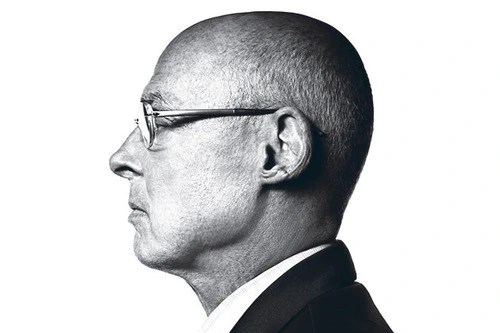
Hank: Five Years From the Brink
Several have written about him and the financial crisis he oversaw as Hank Paulson, the former treasury secretary for the United States, had human aspects that made him more relatable than his administrative predecessors. During press conferences and appearances on various news programs Paulson was visibly shaken as he attempted to explain to the American people that bailing out financial institutions meant saving them.
“The New York Times” financial writer Andrew Ross Sorkin in his 2009 book “Too Big to Fail,” described Paulson as a devoted husband and avid bird watcher (which gave Paulson a tangible element that crossed over into an HBO movie that made Paulson its focal point). Yet Paulson was never allowed the luxury of smoke and mirrors—the bailout needed a face and with his candor to Ben Burnanke’s stoicism, Paulson was perfect for the job.
Joe Berlinger who was part of the directing team that brought us the “Paradise Lost Trilogy,” decided he wanted Paulson alone in a chair while clips of financial woe dribble across the screen. Berlinger is using the same style as Errol Morris in “Fog of War,” a brilliant film in which Robert McNamara chronicles his career and role in the Vietnam War. Although Paulson shares some of the same charisma as McNamara, the film is unfortunately dull. There is only so many images of falling NASDAQ numbers and news clips of former employees walking out with boxes a person can take. Morris’ clips were more metaphorical than informative, while Berlinger has merely prolonged a “60 Minutes” interview. The cartoonish graphs inevitably take a dive in the title sequence, which has become more gratuitous for stock market movies than sex scenes in “Game of Thrones.”
We don’t really learn anything new in this documentary other than Paulson’s take on the crisis and its development (or lack thereof) five years later. Particularly excruciating is Paulson’s and Berlinger’s triangular attempt at breaking down the cause of the financial crisis, materials for making flashcards will be necessary. The documentary “The Inside Job” uncovers the complexities of derivatives and the housing market in a more insightful manner (the rewind button will always be necessary when it comes to how exactly bad debt transformed into a financial meltdown).
What Berlinger does make appealing is his rendering of Paulson’s upbringing and personal life. Besides Paulson the only person interviewed for the film is his wife Wendy Judge Paulson, who comes off as more power lesbian than real housewife of Goldman Sachs. She details their first date at the symphony when Hank threw a paper airplane at the conductor, Wendy wanted to leave immediately. Hank would eventually grow on her, and the couple would live comfortably but not ridiculously while Paulson was working for Goldman Sachs, eventually becoming CEO of the financial giant.
Paulson’s emotions remain raw despite the changing of the guards (Timothy Geithner would replace Paulson as the Treasury Secretary, a post which is currently held by Jacob Lew). Although financial endeavors have always been an aspect of Paulson’s success, he is able to admit they are also a part of his great dilemma —not regulating how financial institutions would utilize the bail money:
I knew Americans were angry when they thought the banks were hoarding and not lending as much as they would have liked. But how does the government make the banks lend? [… ] Do you want the government making lending decisions for the banks? That’s a recipe for disaster […] In addition to not lending, huge bonuses were being paid to some bank executives. That infuriated me—the sheer cheekiness of it. Forget whether they were legally entitled to their bonuses, it was such a graceless lack of self-awareness and a total lack of understanding about how the rest of the world and the rest of America looked at them.
The audience should also take note that the film was produced by Bloomberg Business Week who recently did a cover story on the financial star. Aspects of damage control are present, but like Jackie Siegel in “The Queen of Versailles,” you can’t help but like Paulson even though we have been conditioned to hate what both Doc stars represent, who they are makes us keep watching.
 FILM SQUAD