
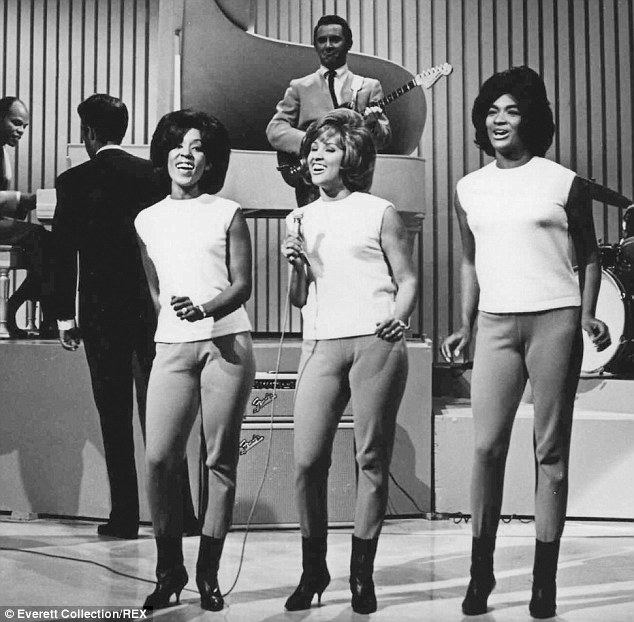
Darlene Love front and center
When one is willing to sacrifice everything for stardom it seems ambitious, glamorous, and perhaps even poetic. If somehow it doesn’t happen for them, it means they didn’t want it enough or were too lazy to efficiently grab life by the balls. What is the journey between smelling those elusive balls and actually grabbing them? In “20 Feet from Stardom” we get a glimpse into that journey as we follow several background singers including Darlene Love, Merry Clayton, and Lisa Fischer who in their quest for stardom toured and recorded with the most prominent musical acts in history. Their story begins as most musical documentaries should, with the birth of rock n’ roll. Not The Beatles on Ed Sullivan or Elvis gyrating his hips kind, but when black women got on stage, harmonized and in some cases sang for the artists.
The film, directed by Mogan Neville, follows the past, present and future of several background singers who made their artists shine and, in some cases, sing. There is something inexplicable about hiding the adorable good-looks and vocal talent of Darlene Love (then only in her teens) behind the deranged puppet master that was Phil Spector. Spector would use her vocals for “He’s A Rebel,” “He’s Sure the Boy I Love,” and credits her voice to The Crystals. Love would be under contract with Spector for several years until she decided to literally hang up her headphones and walk out the door of his recording studio. It wasn’t until she heard her hit “Christmas (Baby Please Come Home)” while cleaning houses that Love decided to re-vamp her career far away from the sound studios of Los Angles and move to New York City where Steve Van Zandt had lined up some gigs for her.
Merry Clayton who bellowed the haunting riff “rape, murder, just a shot away” for the Rolling Stones hit “Gimme Shelter,” would also attempt to strike it on her own, only to find that there was “only one Aretha.” Giants in the business including record producer Lou Alder were mystified by her solo albums lack of success. Merry, now over forty years since her solo debut, still seems mystified. “I felt like if I just gave my heart to what I was doing that I would automatically become a star.”
The ego is alluded to several times throughout the film as one has to have a strong ego to stand in front of the stage, but perhaps more to stand twenty feet back. Most of us stand far more than twenty feet away—content with who we are in a world of uncertainties. The celebrity and the fans who follow them, seem to still be searching for what is missing—not content with the simple artistry of their work. Backup singers have a love for the art of singing in its purest form, unshrouded with red carpet rehab arrivals.
As Tata Vega recalls in the film after her ill-fated attempt at a solo career, “If I’d made it….I’d probably have O.D. ed” In the film Mick Jagger and Bruce Springsteen look content enough when recollecting all the women in their lives, but we forget with stardom (particularly with women) scrutiny is the main ingredient. Judith Hill, a beautiful young backup singer who is now taking the steps to become a solo artist, still has to take background gigs. It’s not until we see her (incognito in a wig) play a supporting role to Kylie Minogue on The Tonight Show, that the mascaraed truly reveals itself. Hill belts out tunes like an Olympic champion yet is behind a singer who can’t even medal.

We are left with a question we already know the answer to; it’s never about talent. A reality Lisa Fischer has accepted, whether glammed out in a black ostrich feather gown accepting a Grammy award or waiting in line at Fed-Ex—the game is most certainly rigged. Fischer’s world is a paradox, touring with The Rolling Stones and Sting while living in a messy apartment, running errands just like the rest of us. She didn’t want the trouble that stardom would provide—Fischer waited too long after her Grammy-winning “How Can I Ease the Pain” to release another album—her moves were not strategic enough for more hits.
“Stardom” is a film the music industry and those who “purchase” music need to see, we have created a rock-less and at times tasteless world of no talent publicity stunts. It’s perplexing that a “one note” singer like Katy Perry has had several acts, but Love, Fischer, Vega (whose voice but not face was featured in “The Color Purple”) and Clayton weren’t given a single scene. The moving image has recently been revitalized due to cable television (a technology that has been around for over thirty years) perhaps the same can be true in the advent of Pandora and Spotify—introducing us to artists that don’t fit into the box radio once provided.
“Stardom” is not simply a doc with talking heads referencing dead people, it’s an invigorating fusion of rock n roll stock footage mixed in with modern day stoicism. Watch this movie and spread the word of Love!
 FILM SQUAD