
I remember being very young when my mother took my sister and I aside, telling us something to the effect that a law was going to pass which would allow gay people to have certain rights. Gay people shouldn’t have “special” rights she went on and these gay men and women might try to bring you into their world. My mother then explained that she and her best friend hugged each other and loved each other, but it did not mean that they were gay. If you haven’t already guessed this is an extremely fragmented memory, but one that has always stayed with me. The perception that individuals who loved the same sex would some how gravitate towards young children (and make them think a certain way about their own sexuality) was ludicrous and thankfully my mother no longer holds this belief, however several in our country still do.
It’s funny how perception works. In actuality our conversation centered around the Oregon Citizen’s Alliance (OCA) campaign to ban “special rights” to homosexuals and bisexuals. OCA sought to repeal the governor’s executive order of banning discrimination based on sexual orientation:
All governments in Oregon may not use their monies or properties to promote, encourage or facilitate homosexuality, pedophilia, sadism or masochism. All levels of government, including public education systems, must assist in setting a standard for Oregon’s youth which recognizes that these behaviors are abnormal, wrong, unnatural and perverse and they are to be discouraged and avoided.
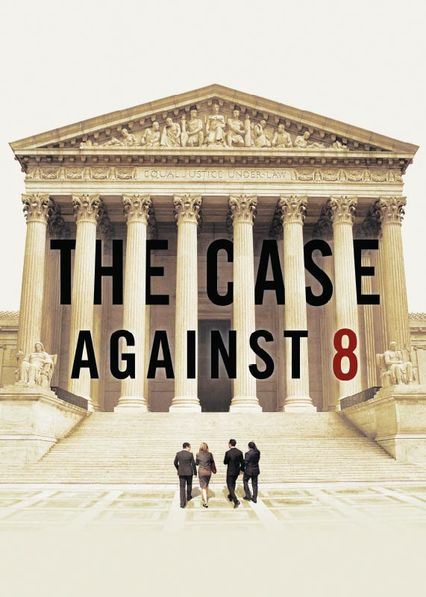
It seems understandable for a mother to be upset by the OCA’s claims. With words like “sadism” and “pedophilia,” the conservative Christian political organization knew who to target. Family is everything and to somehow pervert or dismantle it would be the dismantling of civilization itself. Sixteen years after the OCA’s ballot measure failed to pass in Oregon, California’s Proposition 8 sought to ban same-sex marriages. As Ben Cotner and Ryan White’s documentary “The Case Against 8” details, family was at the core of both legal debates.
One of the couples chronicled in the documentary is Kris Perry and Sandy Stier and we watch as they open their mail: a letter from the City and County of San Francisco arrives stating that their marriage was no longer legal. Both women had two sons and did not need a technicality to determine if they were a family, but this went beyond technicalities to respect. Perry and Stier become two of four plaintiffs in the case Perry v. Schwarzenegger (yes at one point the star of “Conan the Barbarian” was the governor of California), which challenged California’s Proposition 8 ban on gay marriage known as the California Marriage Protection Act.
The film, shot over the course of five years, documents the legal and emotional highs and lows of the case—from District Court, the California Supreme Court to the United States Supreme Court where a defining legal move was made with no appeals over the rainbow. While the filmmakers do an incredible job implementing personability and legal strategies into the film (anyone can watch this and know what is going on in terms of the legal case), the real stars are the plaintiffs themselves, Kris Perry, Sandy Stier, Paul Katami and Jeff Zarrillo. As the filmmakers follow Kris picking up her son from school and Paul and Jeff arranging Christmas ornaments with their parents, the legal battle goes beyond individual respect to the consideration of family.
Ted Olson and David Boies (the two attorney’s representing the plaintiffs) knew that the personal approach would be at the heart of the case and in an unconventional move had both couples testify before the Court. Oslon and Boies, who were at opposing positions in Bush v. Gore, add a certain legal whimsy to the film. Olson is a conservative appellate attorney while Boies a liberal trail lawyer, their methodologies are different which add a complexity to their legal argument. As Olson affirms, marriage is a conservative value, wouldn’t we rather children be raised in homes with married couples?
While rehearsing his argument in front of colleagues, Olson defines marriage. “The word means something, it’s as if the word citizenship were in play here and the individuals were given the right to vote, and the right to travel, but not the right to call themselves citizens.”
Legal preparation also means coaching the plaintiffs for cross-examination and this is when Perry essentially brings it home. When Olson asks Perry if anyone has given her an explanation that made sense to her about why she can’t get married? She replies with, “no they haven’t, it’s just that’s it’s too upsetting, disruptive to other people, I don’t think it’s ever really been about me.”
When the filmmakers touch on the proponent view, it’s presented in a “God hates fags” manner. It should be noted that when California initially passed a law granting same-sex couples the right to marry, it was believed that churches would be forced to perform same sex-marriages—perpetuating the idea that religious liberties were going to be taken away. The court performs civil unions, churches religious ones, which means the argument has no merit (a little thing we like to call the diversion between church and state), but it was a powerful interpretation, nonetheless.
When the legal team behind Proposition 8, led by attorney Charles Cooper, discusses the case at a press conference, the Proposition 8 sign (thinly taped with scotch tape below the podium) falls to the ground, following a nervous laugh by Cooper. A sign of things to come . . .
The standing issue (“the litigant must seek a remedy for a personal and tangible harm”) in which the proponents were presenting before the United States Supreme Court —that same sex couples “are not similarly situated because opposite-sex couples can procreate”—was determined to be a thin assertion. As Justice Breyer articulates once the case made its way to the United States Supreme Court, sterile couples cannot have children, should this mean they do not have the right to marry? Justice Kennedy turned the tables by stating that marriage between same-sex couples is in favor of children, “over 40,000 children live with same-sex couples.” Antonin Scalia (perhaps the most conservative justice on the Supreme Court) joined in the majority decision led by Chief Justice John Roberts.
 FILM SQUAD