
“I spent the majority of my teenage years in hospitals, rehabs and halfway houses. Sometime around the age of 16, I resigned myself to the idea that eventually drugs would kill me and there was no reason to fight it. I would let it take me over, and I had made peace with that.”
-Sam Levinson
Season two of HBO’s “Euphoria” opens with Fezco’s (Angus Cloud) Grandmother Maria (Kathrine Narducci) sliding out of a tan and gold Jack Kent Cadillac convertible wearing a royal blue suit with the words “God’s Word, God’s Will” stitched on the back of her blazer as she struts to Billy Swan’s slow and measured “Don’t Be Cruel.” With a silver pocket pistol at her thigh, she walks into the strip club (passing a stripper eating chicken wings) with authority and purpose. As Marie makes her way to the back of the strip club while the presumed owner is getting a blow job, she shoots two bullets into both of his thighs yelling “hey fuck face!” As it turns out Maria may not be the best of guardians, but she is an authentic provider and a protector schooling her grandson on the drug business, on love and on trust.
Showcasing generational trauma creates a strong trajectory for HBO’s breakout show which postures itself to be a show about modern teens. As “Euphoria” unfolds however, we find that High School is more a less a location or set piece for Sam Levison (the show’s creator) stunning fever dream which is based on the Israeli series of the same name. We get the sense that the characters in which Sam has created are hidden somewhere in space and time with license plates that read “drive safely,” we could be at any High School, in any town during any time.
Sam Levinson (who is the son of acclaimed film director Barry Levinson) is clearly doing more than giving us teen angst in his masterfully imaginative and fluid tale which chronicles the lives of teenagers at East Highland High School. When the series premiered at the Arclight Cinerama Dome in June of 2019, Sam recalled to his audience, “I spent the majority of my teenage years in hospitals, rehabs and halfway houses. Sometime around the age of 16, I resigned myself to the idea that eventually drugs would kill me and there was no reason to fight it. I would let it take me over, and I had made peace with that.”
Sam could have made the show about himself (the son of a famed film director who lost his way) and his experiences in these many Emergency Departments and halfway houses; but he didn’t. Sam centers his story around five High School females (with its faithful narrator) Rue Bennet (Zendaya), as the shows core. Men are naturally very present in this tale, but more as a backdrop to the females they love, adore, admire, terrorize and betray. What sets this show apart from other High School tales is the fluidity with which it moves.
The women: Rue, Jules (Hunter Schafer), Maddy (Alexa Demie), Lexi (Maude Apatow), Cassie (Sydney Sweeney) and Kat (Barbie Ferreira) represent this fluidity as they fit into several boxes; That of popular cheerleader, druggie, dominatrix, nerd, trans and bombshell. Typically other High School tales have been interested in creating a divisiveness amongst individuals where groups (usually women) despise each other.
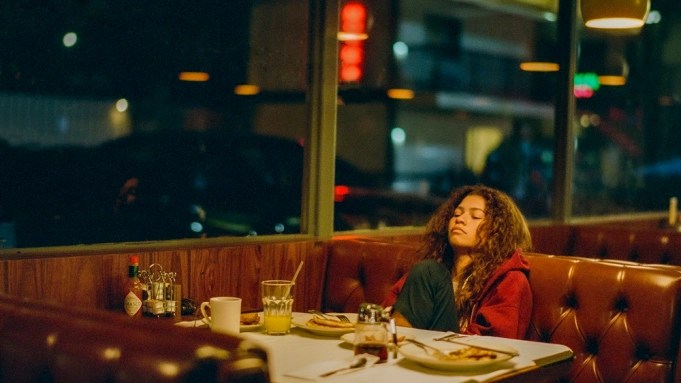
Unlike the Israeli series which never shows the parents faces, Levison understands the importance of backstory and how relationships (including those with our parents) shape and define how we cope. Through the characters relationships with their mothers, fathers, grandmothers, son’s, daughters, grandsons, sisters, boyfriends, girlfriends, sponsors and drug dealers—we see ourselves—perhaps too clearly for comfort. “Euphoria” explores this by creating a back story for each character in rich psychoanalytical detail in the voice of its lead Rue, an opiate addicted teenager who just inherited a suitcase filled with drugs.
In Fezco’s backstory when he decides to stop his grandmother Marie from beating “a cracker with a bowl cut” with a crowbar the trajectory of his life changes forever. A little brother comes as does the responsibility of managing an illegal business. With the shows villain, Nate Jacobs (Jacob Elordi), to bust Fez’s business wide open, once again trajectory changes. Yet “Euphoria’s” power does not lie purely in its biopsychosocial approach (with each pop fueled scene meme ready) the show is more art on Adderall than standard teen fair.
Anyone can show drugs and sex in a series but when “Euphoria” gets its hands on the two activities the painful hum of reality follows with a dash of glitter. We see the parallel of euphoria and despair in Rue’s relationship with drugs (and in her relationships in general) whose initiation is euphoric with hoody covered dance sequences and exquisite hallucinations. The despair kicks in during the second season and the way in which “Euphoria’s” creators have chosen to showcase this despair is stunning.
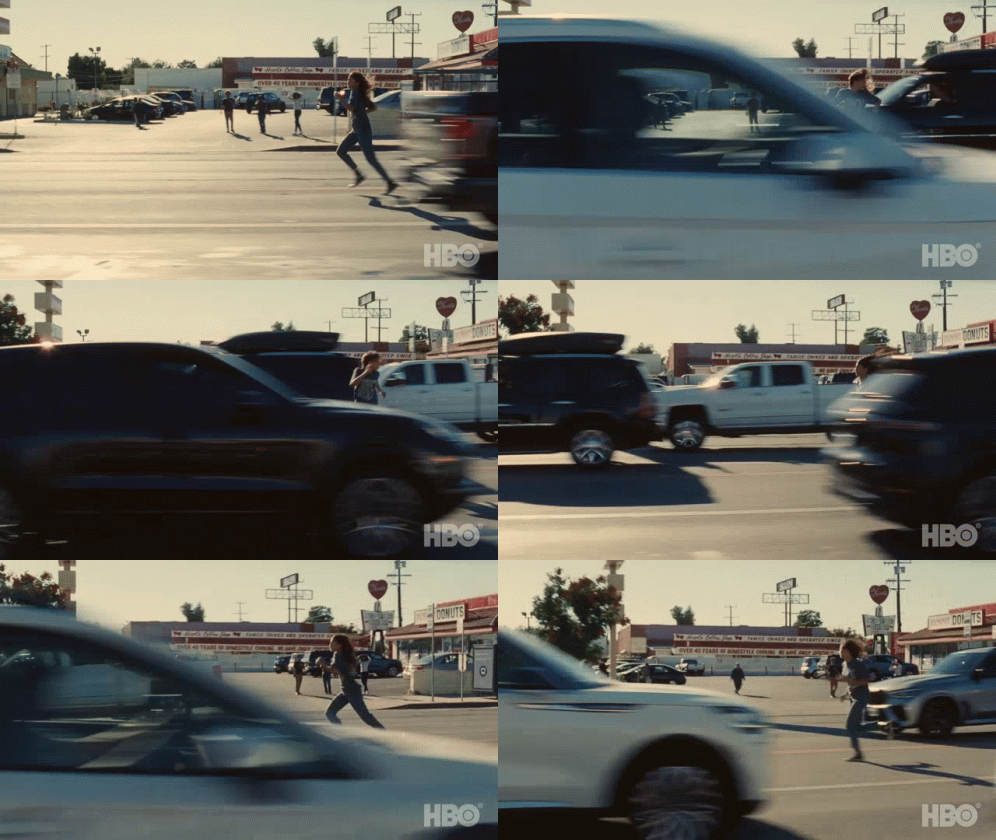
Several scenes in the show elaborate on this pain be it the gnawing of detox (seeing Rue attempt to unwrap a jolly rancher with saliva dripping down her chin is truly a remarkable thing) or the demise of relationships. As anyone who has driven a loved one to the ER can attest, often the most trying job is keeping said individual in the car. When the time comes for Rue to truly face what she has done to herself, her family and her relationships she jumps out of her mother’s car (which is bound for the hospital) into oncoming traffic, breaking into a home and several backyard pool parties causing her to lung up onto a fired-up barbecue while calling it a night after hiding in a trash can. This is a moment right out of Danny Boyle’s “Trainspotting” when Renton (Ewan McGregor) doesn’t choose life or a career as he runs from the cops in a heroin haze.
The true power of the show lies with Zendaya whose remarkable range is so striking, Rue’s heartbreak feels like an operatic movement. Several of the scenes between Rue and her mother Leslie (Nika King) are improvised and the actors often participate in their characters plot development in order to create authenticity. This authenticity scoops up its audience into an addictive state of memory, heartbreak and wonder.
When the first trailer for “Euphoria” appeared after “The Bells” episode of “Game of Thrones” it was a shock to the system for audiences who were more comfortable associating with white walkers and the past. Now in its second season the show has become a cultural phenomenon which may have something to do with the current state of things: a heartbroken and unsettled world more comfortable and curious with the things that break us than ever before.
 FILM SQUAD