
By Michelle Montgomery
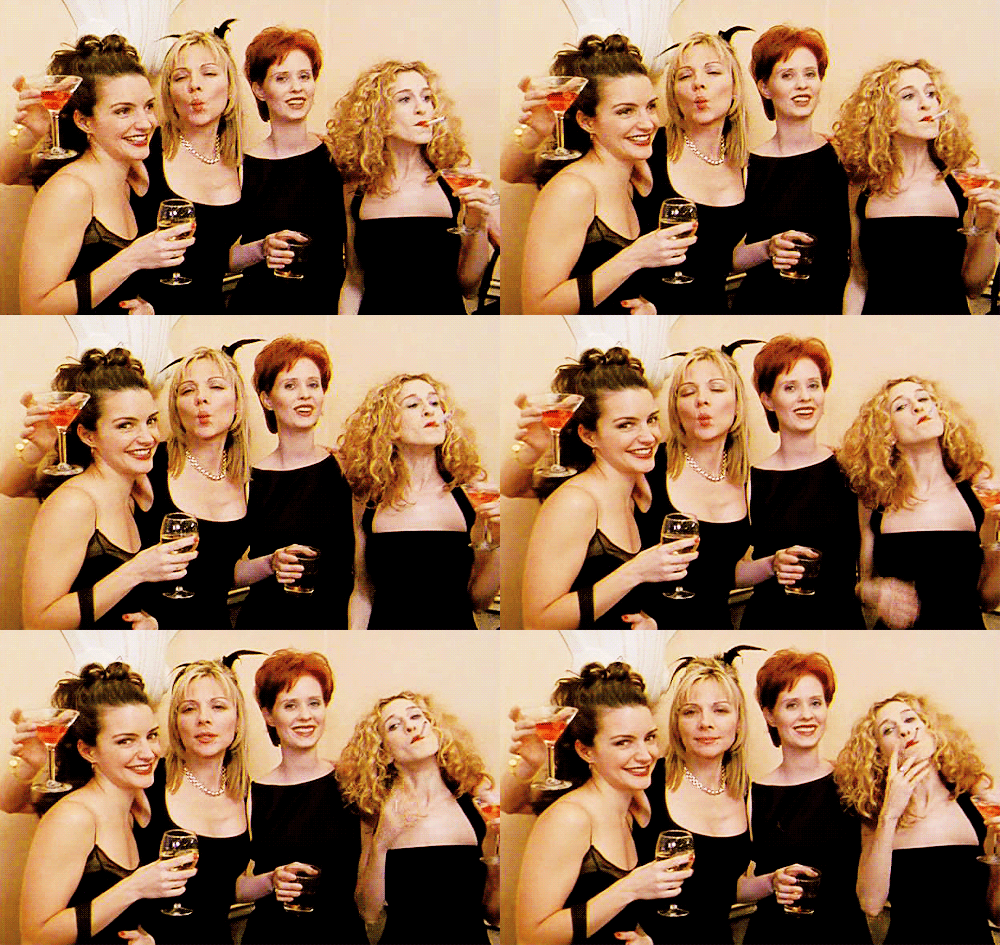
The series and book “Sex and the City” (which was first published in 1997 and based upon an anthology of columns Candice Bushnell began writing in 1994 for “The New York Observer”) begins with an English woman moving to New York City in a cab brimming with Lois Vuitton luggage. The beautiful and successful journalist meets Tim a forty-two year old investment banker “who made about five million a year.” Tim wines and dines her, takes her to the Hamptons and tells the “architect to fill in the railings on the second floor, so the children wouldn’t fall through.” After her trip with Tim the English journalist expects Tim to purpose, he doesn’t, he ghosts her. Carrie Bradshaw (a fictional version of Bushnell), confused by the journalists optimism and certainty, goes on to tell her (and the audience) about “the age of Un-Innocence” in Manhattan, “cupid has flown the co-op.”
And just like that the battle cry rang: “Sex and the City” would become a cultural phenomenon where women were showcased as financially independent, authentic and sexual (and who were often shown with multiple partners). Colleges around the country would begin offering courses in “sex and urbanization” based on the rise in popularity of the series and how it would change the course of relationships and how woman (and men) view themselves in relationships. The book was quickly picked up and aired on HBO June 6th, 1998 and lasted for six seasons. The series birthed two films and a prequel series, “The Carrie Diaries” which was featured on “The CW” network and premiered in 2013. With Bushnell now pushing a one woman off off Broadway show “Is There Still Sex in the City” at the Daryle Roth Theatre in New York (the same theatre that gave us “Bat Boy” in the early 2000’s) one has to wonder how much juice is left in this lemon drop.
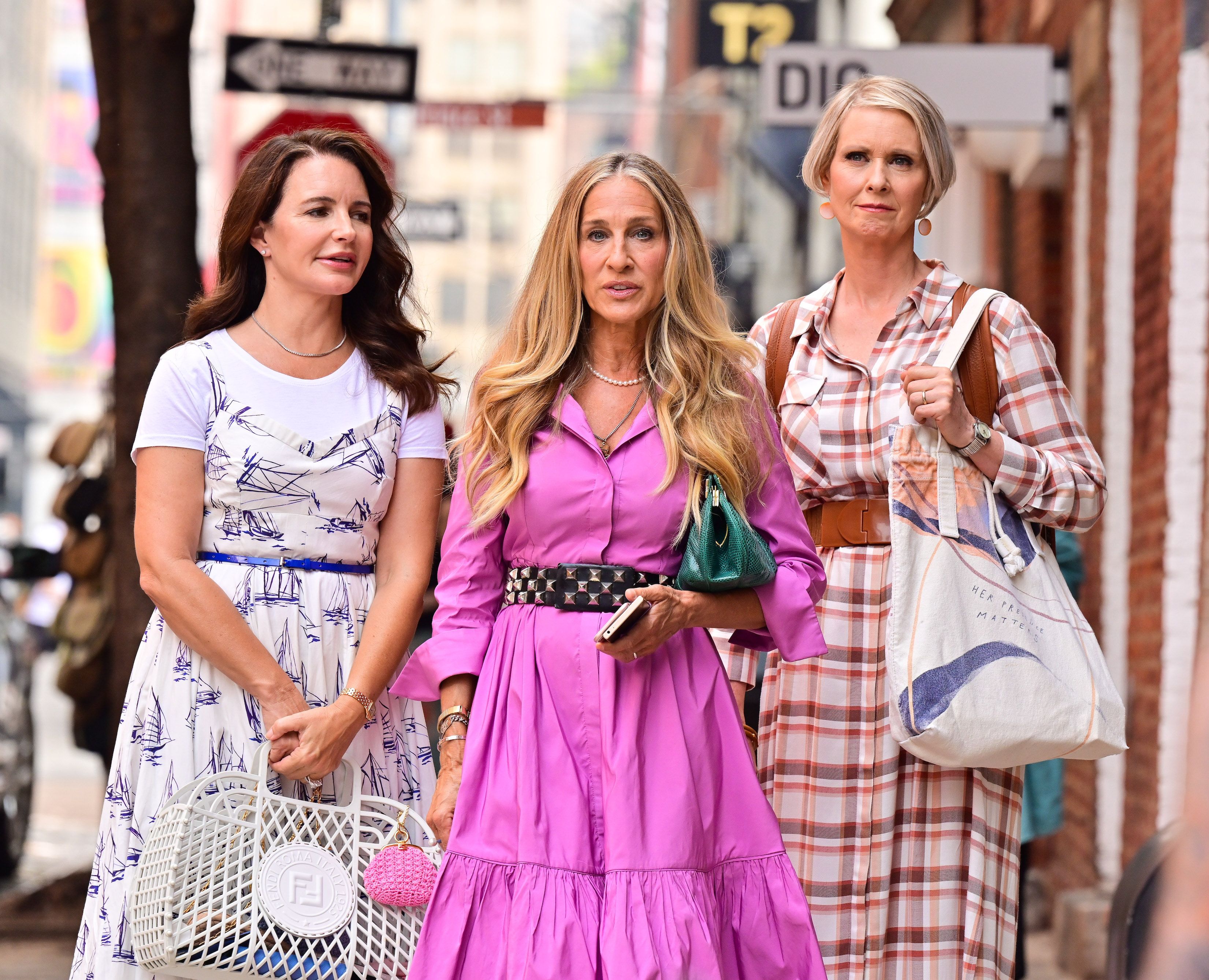
Cut to the current reboot “And Just Like That” which began airing on HBO December 9th, Carrie Bradshaw (Sarah Jessica Parker) sits on a grey couch at the fictional offices of “Nina Manetti” or as Carrie describes “a higher end Brunello Cucinelli” (which is a real Italian luxury fashion brand that specializes in cashmere garments). She sits framed by a large black and white picture of a goat which takes up nearly the entire wall of the beautifully curated and sparse loft office space. Carrie is waiting for her nemesis, Natasha Mills. In this now post-pandemic New York City, Carrie sits wearing a contrasting lilac Carolina Herrera taffeta shirt dress which is cinched at the waist with her now signature black and silver studded belt that was featured in the first film. This image made me pause for a moment as I wondered if the series could pack any sort of punch the sixth time around? Carrie soon storms out after she is informed that “Natasha is in Rome” the background jazz music fumbles as she meets her two friends Charlotte (Kristen Davis) and Miranda (Cynthia Nixon) who have been waiting for her at one of the adjacent Starbucks. We learn that to this day Natasha (and Big’s actions around Natasha) consume Carrie and that despite the women’s maturity, they are still still managing to fumble through the streets of Manhattan.
The series (spoilers ahead) may just survive with the killing off of Mr. Big, played by Chris North, who was just in the news after two woman accused him of sexual assault. In the 90’s we celebrated the strong and successful portfolio man and in the 2020’s we kill him dead. Big’s death, which begins with a Peloton bike and ends with Carrie’s blue Satin Manolo Blahnik pumps drenched in shower water, seemed cheaply maneuvered, yet gives Carey (and the audience) a fresh start. We get the opportunity to say goodbye to Big and all that he represented. A tall dark investment banker didn’t save us then and he’s certainly not saving us now.
When audiences were informed that Kim Cattrall would not be returning as the show’s comedic star Samantha Jones, fans were stunned at the possibility that the show would air without Kim (or at all), often asking in the instagram comments section: “did we even ask for this?” Seekers of the truth would tell you no, there was no indication from the general public that we were in need of re-vamped content from over 20 years ago. However “And Just Like That” is willing to rectify this with a new title, the addition of twenty minutes per episode (giving it the gravitas of a drama series) and a new world in which the characters find themselves. With four episodes in and the death of a main character, the writers try with all of their might to keep us engaged.
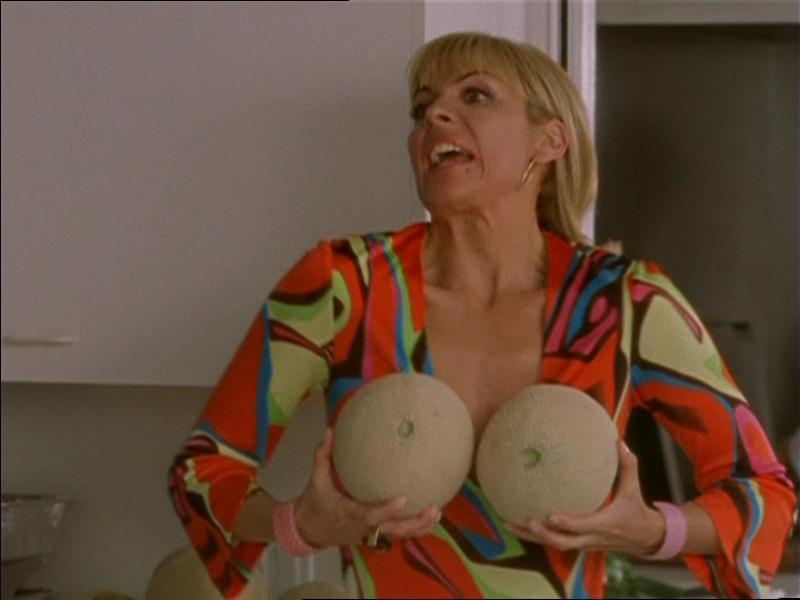
Kim Cattrall in the famous melon scene from season five of “Sex and the City”
“And Just Like That” recognizes this new world and aspects of the original show (which were once considered taboo) are no longer edgy or radical (having sex like a man, dating black men and financial independence) are no longer concepts that need to be explored. The original series rarely featured actors of color and centered on the rich and white upper-middle class as a template for success. Currently the series understands that the world has changed and that it would be cautious to add diversity to the cast and to create show ideas around newer and truer concepts of sexual diversity. Yet the show struggles due to its past and its nature around caution.
“And Just Like That” seems to be covering subject matters out of duty rather than authentically trying to gauge where the three women are at right now. Insert they/them comedian and podcast host Che Diaz (Sara Ramirez of “Grey’s Anatomy” fame) to stir these ladies up. According to their IMDB Ramirez came out as bisexual in 2016 and non binary in 2020, uses they/them pronouns and is recently separated from their husband whom they married in 2012. Sara’s true to life story mirrors aspects of Che’s, yet their character seems super imposed or dutifully inserted with this group of women. Che is here to wake and to shake us up in the same way that Samantha did, but without authenticity to back it up this move seemed forced and the character really isn’t doing anything aside from reminding us of how off base the show has become.
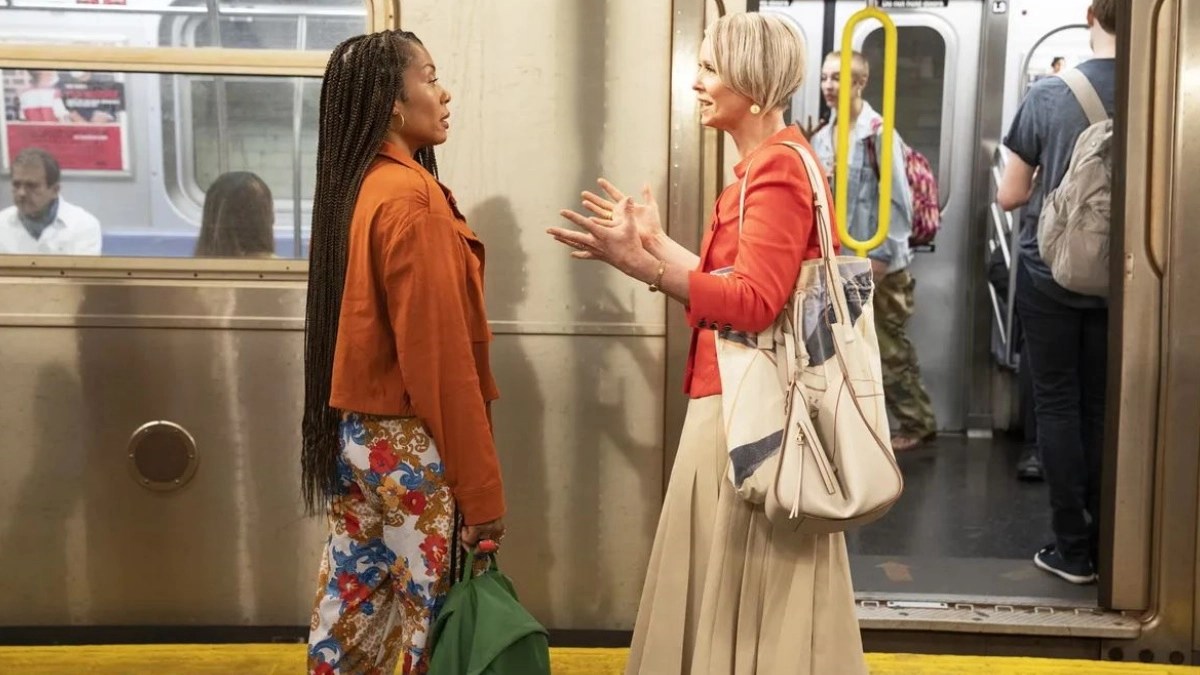
An example of this is when Miranda Hobbs stumbles into her “policies and principles of humanitarian law” class at Columbia University where she is now studying human rights “to pair with [her] law degree.” The nervous Miranda, having just ordered a drink at a bar that “doesn’t open till eleven” shuffles into class and accidentally takes the professors chair. When the professor Nya Wallace (Karen Pittman) gets to her seat Miranda mistakes her for a student due to her braids. As Miranda continues to speak, one wonders if Miranda is even in the building: “my comment had nothing to do with it being a black hairstyle. I knew you were black when I signed up for this class, that was important to me.” Her fellow students look down, uncomfortable and shocked.
The scene was shocking for me but on a different level. Miranda who lives (as we all remember from season six) in da people’s republic of Brooklyn, certainly has access to more black people than the average Karen. She was also the intellectual “woke” centerpiece of the original series and this scene seems like a writers device to create foe realness, rather than an opportunity to see Miranda and her counterparts grow and develop into authentic character studies. “And Just Like That” shows our girls as blubbering cultural idiots and one would hope they have grown over the last 25 years. With Stanford Blatch (Willie Garson died of cancer in September) and Samantha Jones now gone, the humor is about as elevated as a flat tire and one of the few things we have left (despite the absence of costume designer Patricia Field) are the clothes.

 FILM SQUAD